
 |
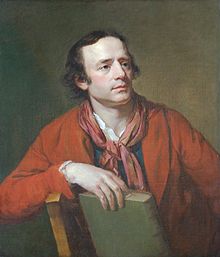
| Barre was an Irish soldier in the English army and a renowned member of Parliament, noted by HoraceWalpole for his"very classic and eloquent diction." |
A recent article in The Wanderer by Terence P. Jeffrey presented a fascinating bit of British history that directly relates to our country's beginning. He described a disagreement in Parliament between Col. Isaac Barre, a veteran of the French and Indian War wounded at the Battle of Quebec, and Charles Townsend, a politician who became Chancellor of the Exchequer and was responsible for the detested"Townshend Acts," a series of laws imposing taxes on the American colonies, the first of which was the Stamp Act of 1765.
The Stamp Act required the colonists in America to purchase stamps for every printed document: newspapers, legal notices, ships' manifests, in fact, every commercial transaction. The money was to be used for troops to defend and protect the American frontier. Despite the use of the money, the real objection to the Act was the fact that it was imposed without the input of the colonial legislatures themselves. Hence the motto: "No taxation without representation."
During the debate in Parliament over the Stamp Act on February 6, 1765, Barre gave this sensible advice to the members of the House of Commons:
