Search This Blog

Showing posts with label lives of the saints. Show all posts

Thursday, July 25, 2024

Reflecting on Facebook Memes

I know a lot of people hate Facebook and social media in general; and I tend to agree. Having said that, though, I just watched with a smile the first steps of my niece's youngest child, and I delight in keeping up at least a little with far-flung relatives and friends. Facebook makes that possible and it truly is a gift of family.

Wednesday, August 28, 2019

A Saint for Our Time: Terrorism, Invasion, and Political Upheaval Marked St. Augustine's Life!

Today is St. Augustine's feast day. I generally do a little research about the saint whose feast day we're celebrating. Today it was St. Augustine, the Bishop of Hippo. His early life of licentiousness certainly is a common mark of many in our time. His embrace of heresy certainly links him even to many of our clergy, although that was before his conversion unlike his bishop brethren of the modern age whose careers of lust and greed have so scandalized the faithful.

Augustine lived in tumultuous times. That's another link to us. Here's what I read at the Columbia College website:
When Augustines' pupil Possidius came to compose a biography of his master (which still survives), he spent little time detailing his master’s ideas; instead, he wanted to highlight for posterity all of the manifold controversies and personal dangers faced by Augustine throughout his life. So we hear, for example, about terrorists called Circumcellions from the so-called Donatist heresy, who launched raids on Catholic churches with a crude tear gas made of lime juice and vinegar, and allegedly laid an ambush to kill Augustine himself. Finally, Augustine lived to see the catastrophic invasion of Africa by the Vandals, and Possidius gives a vivid picture of the struggle to assemble and safeguard his works amidst the general destruction. Possidius’ biography also appends a letter in which Augustine encourages anxious bishops not to flee, so as to provide a ‘place of refuge’ for the displaced. The psychological conflicts depicted in the Confessions are intense, but also largely interior and personal. It is salutary, then, to remember that Augustine was far from detached from the political upheavals that marked the period in which he lived.

Thursday, January 5, 2017

Reflecting on a Plan of Life for 2017

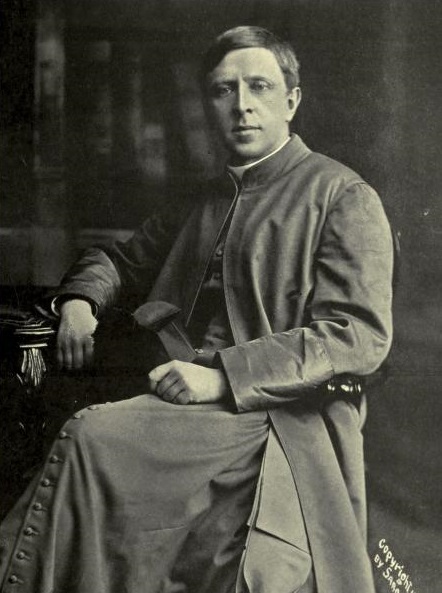
Fr. Robert Hugh Benson
I'm reflecting on my spiritual goals for 2017. After reading a little pamphlet by the famous priest-convert Robert Hugh Benson on The Friendship of Christ, I've decided to focus on the saints and choose a different saint or group of saints to study each month. After all, they are the ones who excelled in the school of friendship with Christ so what better teachers can one have except Christ Himself? And since Christ is the friend who never fails I think I'll also do a daily reading from the Imitation of Christ. I've always loved that little book and actually memorized a bit that I pray after Communion.

But I also want to know Christ's close friends better, more than as the go-to helpers to find lost objects (St. Anthony) or pray for friends with special needs (e.g., St. Gerard Majella for women in childbirth) or for the survival of our bee colonies (St. Ambrose and St. Valentine). I want to get to know at least a few of the saints more intimately especially Mary.

Friday, July 11, 2014

Lives of the Saints and St. Joseph de Clairval Abbey

St. Ignatius' conversion began with an injury on the battlefield that left him laid up in bed for months. The only reading material he had was Scripture and the lives of the saints. He preferred the romances of the time about knights and their adventures, but when he compared the fleeting entertainment of those stories with the examples of true love and courage reflected by the saints, he was changed forever.

On retreat we listen to readings at meals from the Imitation of Christ and the lives of the saints. What a blessing to be filled with true examples of those who conformed their lives to Christ and became living witnesses to His love.

I receive a monthly newsletter from Saint Joseph de Clairval Abbey in France that each month features a particular saint (or saint in the making). Some are well known like the children of Fatima or St. Damien or St. Therese of Lisieux, but many of those featured are lesser known. Their stories are inspiring and often riveting. If you want wonderful bedtime reading, ask to be put on their mailing list. Think of going to bed contemplating the life of men or women who loved Christ enough to give their lives completely to Him. Each story is short, only four pages, but a wonderful introduction to a hero or heroine. Here's an example of a favorite saint of mine, Margaret Clitherow, one of the English martyrs, a wife and mother executed for nothing other than loving the Mass and letting priests say it in her home. You can read about her here.

I regularly have masses said for my loved ones at the Abbey. Their newsletters have been such a gift to me that I want to return the favor by supporting them.

Monday, May 26, 2014

Reading about the Saints: St. Monica, Mother of St. Augustine, Intercede for our Children

I was up from 3:30 to 5:00 a.m. and took my Kindle downstairs to pass my awake time. It's loaded with writings and biographies of saints. This morning I read a biography of St. Monica by Mother Frances Forbes. It was short and I finished it, and what an inspiring portrait of holy Monica was contained in those few pages. What trusting perseverance in God's power to change both her pagan husband and her brilliant, but stubborn, son!

Mother Forbes wrote many other short biographies of saints and I look forward to tracking them down as well. Think of the power of the lives of the saints to transform those who are lost in sin. St. Ignatius was converted reading lives of the saints while recovering from a battle wound. Edith Stein was converted by reading St. Teresa of Avila. Reading about St. Monica makes me want to grow in trust and patience as I pray for family and friends struggling in our fallen world. What a gift to persevere so diligently that the salvation of another is the fruit of our prayer!

Who needs your prayers today? What will you suffer and sacrifice to bring that loved one to the fullness of truth?

Friday, August 16, 2013

A Movie Worth Watching Over and Over

Larry and I started watching House of Cards last week but after one episode I decided I'm sick of filling my head with stories of intrigue, betrayal, and immorality. We watched the British version a few years ago and the American appeared to be following it closely. When I thought of all the murder and mayhem, it made my heart sink. Who needs it?

So from now on my focus for crash time will be inspiring movies of the saints. (I think I had a St. Ignatius of Loyola experience -- medieval romances left him empty, lives of the saints filled him with admiration and zeal..) One of my favorite movies in the genre of holy men and women is The Reluctant Saint about St. Joseph of Cupertino. We've probably watched that half a dozen times at least. Maximilian Schell as Joseph is sweet and dear and his whole body professes simplicity and humility. A Man for All Seasons about St. Thomas More is another favorite and Paul Scofield is magnificent. I saw him play the same role on stage years ago and he was equally compelling. The courtroom scene gives me goosebumps every time I see it.

But last night we added another work to the repertoire of fantastic films, Pius XII, Under the Roman Sun.


The film would make a good companion piece to The Scarlet and the Black since both films cover the same period, the occupation of Rome during World War II and the Vatican's involvement in rescuing Jews and others targeted by the Nazis.

Friday, August 10, 2012

St. Lawrence, Pray for Us

Today is the feast of St. Lawrence, my husband's patron saint. St. Lawrence was a deacon under Pope St. Sixtus who was responsible for distributing alms to the poor. When Pope Sixtus was being taken to martyrdom, St. Lawrence followed weeping saying, "Where are you going without your deacon?" The pope assured him he would follow him in three days. So Lawrence sold what was left of Church goods and gave all that remained to the poor. When the local Roman prefect demanded he produce the Church's treasure, Lawrence asked for three days to gather it together. Then he brought the poor people of Rome and presented them saying they were the treasure of the Church. The prefect didn't think much of St. Lawrence's response and ordered him grilled. St. Lawrence earned fame by asking the executioners to turn him over because he was done on that side.

Consider the joy and sense of humor of the saints as they faced gruesome martyrdom. The Roman maryrs were famous for singing as they were led into the coliseum for slaughter. St. Thomas More asked his executioner to wait while he moved his beard out of the way of the axe assuring him it had committed no offense. Think of St. Ignatius of Antioch being led to martyrdom and rejoicing that the beasts would grind him like wheat to make him the pure bread of Christ. What a symbol of Eucharist to remind us that suffering represents the greatest union with our Savior. St. John Roberts, a Welsh priest hanged, drawn and quartered at Tyburn joked as he was led through the streets to the scaffold. When someone in the crowd called out why he didn't wear his cap, he replied, "Why, are you afraid I'll catch a cold?"

Think how many souls these martyrs brought to salvation by their suffering and death. Can't we accept and rejoice in our tiny sufferings when we think of these spiritual giants?

St. Lawrence, on your feast day, please pray for us.

Tuesday, December 27, 2011

Wish I'd Seen These Before Christmas!

Denver school creates action figures of saints for kids

What a great idea! When I saw these action toys, I immediately thought of the meditations of St. Ignatius Loyola and his spiritual exercise of the two standards. On the one hand, you have Jesus on the plains around Jerusalem gathering the saints to battle for souls. On the other hand, you have Satan and his minions gathered on a high place around Babylon, the wicked city, making their plans to seduce and destroy. May this company soon have figures of many of the saints to take the place of the Ninja Turtles and super heroes. The real superheroes children can look up to battle for souls in the Church Militant. You can order St. Michael here. St. Maximilian Kolbe and St. Therese of Lisieux are coming soon.

Monday, July 25, 2011

Feast of St. James the Greater

St. James the Greater (St. John's brother) is one of my favorite heavenly heroes. Jesus called the two brothers "sons of thunder" which probably reflected their fiery temperaments, but I can't help thinking whimsically that it also may have been the nickname of their dad, Zebedee. After all, the apple doesn't fall far from the tree. Tradition tells us St. James went off to Spain to preach, but returned to Jerusalem where he died a martyrs death, the first apostle to do so, a victim of Herod's desire to placate the Jews. Catholic historian, St. Eusebius, whose feast day is August 2nd (my daughter Jamie's birthday) says that St. James converted his accuser and both were beheaded together, another graphic testimony to his zeal and love for God!

Santiago's magnificent cathedral is dedicated to the saint. When my daughter was teaching at the University of Santiago fifteen years ago I visited for about two weeks and attended daily Mass with my little granddaughter while my daughter worked. I usually got lost walking home and had to reorient myself by the cathedral spires. On Sunday we went to the main Mass and marveled at the giant incensor being swung in the sanctuary. What a sight! Not long ago Pope Benedict had that same experience and watching the video of his visit brought back many fond memories for me.


Much as I love St. James the Greater, I am equally fond of St. James "the lesser," cousin of Jesus and author of the Epistle. (Feast day May 3rd) I love him for his no holds barred approach to faith. "You show me your faith, I'll show you my actions." As the head of the Church in Jerusalem, he was obviously no stranger to suffering and was certainly aware of the martyrdom of the "greater" James. In his letter to the "twelve tribes in the dispersion" who fled in the face of growing persecution, he gets right down to brass tacks after the greeting:
Count it pure joy when you are involved in every sort of trial. Realize that when your faith is tested this makes for endurance. Let endurance come to its perfection so that you may be fully mature and lacking in nothing.
No sugar-coated Christianity from St. James. "Happy the man who holds out to the end through trial!" He urged the flock to "welcome the word that has taken root" and warned them to put it into action. Was he thinking of his martyred friend when he wrote these words? "If all you do is listen to it, you are deceiving yourselves." And then those famous lines:
What good is it to profess faith without practicing it? Such faith has no power to save one, has it? If a brother or sister has nothing to wear and no food for the day, and you say to them, "Good-bye and good luck! Keep warm and well fed," but do not meet their bodily needs, what good is that? So it is with the faith that does nothing in practice. It is thoroughly lifeless. To such a person one might say, "You have faith and I have works -- is that it? Show me your faith without works, and I will show you the faith that underlies my works!
His warning about use of the tongue cuts to the quick. It must be controlled like a bit controls a horse or a rudder controls a ship because the tongue is like a "tiny spark that sets a huge forest ablaze." When used for good it sets hearts on fire. When used for ill its fire is "kindled by hell." Don't we all have problems with controlling that "small member?"

I'm re-reading St. James' epistle today. I think St. James the Greater would approve that as an appropriate way to honor his feast day. Although he never had the opportunity to read it during his lifetime, I have no doubt he is well aware of it in heaven and rejoices when Christians read and heed. I invite you to join me and then choose an action as small as making a phone call, praying the chaplet of Divine Mercy for someone living a sinful life, writing an encouraging note, or fixing a meal for a sick neighbor or a new mom. Every action we do for the Lord reflects our faith. It is especially important to pray for and encourage those who have gone astray just as St. James the Greater did by leading his accuser to the truth. As St. James the lesser says in closing his letter:
Remember this: the person who brings a sinner back from his way will save his soul from death and cancel a multitude of sins.
St. James and St. James, pray for us today. For more about St. James the Greater go here.) For more on St. James the Lesser go here.

(And thanks to Janet for clearing up my confusion about the two saints.)

Sunday, May 22, 2011

How Many Will Be Saved?

A few days ago I blogged about the saints' views on how many will be saved. Well, seems Mike Voris and I are on the same wavelength. He posted quotes from the saints on the same question. It's pretty chilling to think that most people will be lost. No wonder the little children of Fatima tied rough ropes around their waists, gave their lunches to children poorer than themselves, and drank from puddles as penance for poor sinners. "We must save poor sinners," little Jacinta with her tender heart often said.

We need to foster a tender heart for sinners. St. Francis of de Sales says to judge ourselves sternly and others with charity. So let us commit to pray, fast, and do penance for poor sinners. Perhaps the degree we are willing to suffer for others will determine our own salvation.

Jesus, be merciful to me, a sinner. Jesus, Mary, and Joseph, save souls.

Thursday, March 3, 2011

St. Katharine Drexel, Pray for Us!

We live in a culture where the rich are often demonized as selfish monsters exploiting everyone around them. But today's optional feast day is a celebration of the wealthy who exhibit a proper attitude toward the use of their possessions. Katharine Drexel (1858-1955) was the second child of a wealthy banker and philanthropist in Philadelphia, Francis Drexel. Her mother, Hannah, died several weeks after her birth. Later, her father remarried and he and his new wife, Emma Bouvier, taught their children that all they had was loaned to them by God to be shared with others.

On a trip out West, Kate's heart was moved by the sad condition of the native American Indians. In 1887 she financed her first mission in Sante Fe. Later she personally asked Pope Leo XIII to send missionary priests to staff some of the missions she was personally financing. He responded by inviting her to become a missionary herself. That was the beginning of her lifelong commitment to poverty and service. She founded the Sisters of the Blessed Sacrament to work among native Americans and Afro-Americans.

She was far ahead of her times working to increase educational and social opportunities for America's oppressed minorities. Her love and great devotion for the Holy Eucharist empowered her ministry which continues today through the order she founded. Like St. John Bosco, Mother Drexel believed that to bring children to Christ the sisters "must attract them with joy." The first school she founded staffed by her sisters was a high school for black girls, St. Francis de Sales, in Powhaten, VA. She also founded Xavier University in New Orleans, one of the earliest Catholic colleges for black youth.

What an example she is for those who dream of serving God. Her own words bear witness to how He acts in our lives:
I looked up in wonder at God's wonderful ways and thought how little we imagine what may be the result of listening and acting on a desire he puts into the heart. If He puts it into the heart, He will bless it; if we try to act upon it, great will be the effect before God.
Mother Katharine Mary Drexel was canonized October 1, 2000. Her national shrine is in Bensalem, PA

For more about this wonderful woman of God visit these websites:

KATHARINE DREXEL (1858-1955)

National Shrine of St. Katharine Drexel


Tuesday, November 30, 2010

St. Andrew the Apostle: First Called by Jesus

Today is the feast of St. Andrew the apostle, the first of the twelve to follow Jesus, the one who was always on the lookout to bring Him souls. Andrew and his friend John were disciples of John the Baptist. No sooner did John point out the Lamb of God to them, saying, "He must increase; I must decrease," than they immediately followed Jesus.

Andrew brought Peter to Jesus urging, "Come and see." And when Jesus asked the apostles if they had any food to give the hungry  crowd, it was Andrew who immediately responded by bringing the little boy with the loaves and fishes to the Master. When Philip met some Greek proselytes to Judaism who wished to see Jesus, he brought them first to Andrew. Andrew could always be counted on to lead others to Christ. And so he did, disappearing into the background in his profound humility after being the channel of grace for others.

How I love Andrew! Since I don't know my guardian angel's real name, I call him Andrew as a reminder that I want him to lead me straight to Jesus. And how appropriate it is when Andrew's feast day falls in early Advent, the season when we anticipate the coming of Christ and strive to draw nearer to Him. St. Andrew invites us to spend Advent coming to see Christ in all his innocence as the babe in the manger; in his ministry as prophet, priest, and king; in his suffering and death on the cross; and anticipating his coming at the end of the world as judge.

Let us spend this Advent like St. Andrew inviting others to "Come and see" the wonder that is Jesus Christ our saving Lord. Come, Lord Jesus! St. Andrew, pray for us.

Sunday, October 31, 2010

A Virtual Pilgrimage for Sunday

To Abbaye Saint-Joseph de Clairval in Flavigny-sur-Ozerain-France

The Benedictine monks of St. Joseph Abbey publish a wonderful monthly newsletter sharing the life of a saint or holy person. I highly recommend it for spiritual reading. They will send a three-month subscription for free but I hope you will support them. Sign up here.

You can have Masses said at the abbey and they also have a shop that offers beautiful icons and statues.

The monks also offer retreats for men based on the Spiritual Exercises of Saint Ignatius both in France and Ireland. I hope you enjoy browsing their website.

Sunday, April 25, 2010

The 13th Day: the Story of Fatima


I watched The 13th Day last night with DH (shorthand for "dear husband" for the uninitiated). It's a 2009 film about the miracle of Fatima and I think it is superb. I've read Lucia's memoirs and the movie is true to the events. Choosing to shoot primarily in black and white and sepia tones, with color saved for the vision of hell and the miracle of the sun, the cinematographers made a good choice. It gives a sense of the historical period when things happened. Since the newsreel shots of World War I are also in black and white it also provides a consistency that was effective. The technical aspects of the film are fine and well done although the nighttime sky with the moon and stars looks fake as does some of the rain in the miracle sequence. Those are small criticisms in an overwhelmingly effective presentation which was shot mainly on location in Portugal.

One of the things I especially appreciated about the film was the screenplay. Often anachronisms creep into modern films about older events (Check out the ridiculous dialogue in the Richard Burton/Liz Taylor extravaganza Anthony and Cleopatra), but these writers avoided that. All the conversations are stamped with the historical time without being stilted.

The opening scene shows Lucia as an adult and now a nun writing her memoirs at the direction of her superior. She sits at a desk by candlelight telling the story as she writes. Occasionally, she appears again as a third person narrator. The switch between present and past is effectively done.

The children are wonderfully portrayed by the little actors as are the parents, especially Lucia's mother played by Jane Lesley. In her book about the events, Fatima in Lucia's Own Words, Lucia describes how severe her mother was. You see that throughout, but without the woman becoming a stereotyped "mommie dearest." Her mother's gradual softening culminates in a tender scene near the end when Momma tells Lucia she will attend the October 13th apparition and "die" with her. Jacinta and Francisco's father was also well-portrayed. He never doubted the children and the exchange with Lucia's dad about "acting like a father" was played in an understated, not macho, way. I found it touching. In a culture where fatherhood has been so denigrated, it is refreshing to see a man played with quiet strength and dignity. He made me think of St. Joseph.


The only jarring note I found in the film was the scene when the children are taken by the mayor of Ourem and put in the jail cell with the male prisoners. One of the men, the most menacing in fact, dances with Jacinta. I couldn't help thinking about the child sex abuse scandals as he picked her up and held her in his arms. But that is putting a modern interpretation on a past event, one that really happened. Here's how Lucia described it in her first memoir:
Among the prisoners, there was one who played the concertina. To divert our attention, he bgan to play and they all started singing. They asked us if we know how to dance. We said we knew the [fandango] and the [vira]. Jacinta's partner was a poor thief who, finding her so tiny, picked her up and went on dancing with her in his arms! We only hope that Our Lady has had pity on his soul and converted him!
As I watched the film there were several times I noticed a resemblance between my grandson Ryan, who is sweet and tender-hearted, and Francisco, the little shepherd boy. It made me smile and reminded me how similar children can be even separated by generations and an entire way of life.

I reread a portion of Lucia's memoirs after seeing the movie and found lines that were directly incorporated into the script. Obviously, Ian and Dominic Higgins the producers, directors, and scriptwriters for the film, as well as the main catalyst for everything else, had great respect for the story and wanted to portray it accurately. In an interview on The 13th Day website, Ian pointed this out saying:
The 13th Day is a dramatization of actual events and most of the characters that appear in the film actually existed, so research was crucial from that point of view and from day one, everyone on the team was committed to realizing this film in such a way that it kept as true to the actual events as possible. As filmmakers we’re also very big believers in the value of research as inspiration too. We’ve found so many great ideas for a scene, hiding away in the pages of an old book while researching the script. It’s like digging for gold, there are so many fantastic nuggets of information buried away, just waiting to be re-discovered, it’s a really exciting part of the process.
If you have wondered about Fatima and what happened there, you don't want to miss this movie. It would make a great addition to any Catholic familiy's film library giving a glimpse into extraordinary events that occasionally happen to ordinary people. I found it an inspiration to the soul and satisfying proof that it doesn't take big bucks to tell a great story. This was the first feature-length film from this talented pair which gives one great hope for the future. Hollywood no longer has a stranglehold on the industry, praise God. I highly recommend The 13th Day!

Friday, March 26, 2010

And You Think You Have Troubles: Ask Blessed Margaret for Help

I just finished reading Blessed Margaret of Costello by Fr. William Bonniwell, O.P. (for the second time). What a story. Born in 1287 in the papal state of Massa Trabaria in Italy to rich parents of the nobility (I can't call them nobel). Margaret was grossly deformed with one leg shorter than the other, a hunched back, ugly, and blind. Her parents, embarrassed by their daughter, hid her in the castle whenever guests arrived. Although the garrison of soldiers loved the bright little girl with the sunny disposition, she was unloved and unwanted by her parents. (Sound familiar?)

Fortunately, the priest of the castle recognized her great intelligence and began to form her in the faith from an early age. Despite the fact that she knew of her deformities, her parents often told her how ugly she was, Margaret did not grow bitter or angry. Already she reflected a saintly spirit of acceptance.
 
When Margaret was six her parents had a little cell built next to a church in the woods away from the castle.  Only the neighboring serfs and country folk worshiped there, none of their noble friends. They locked her into this tiny prison where she lived until she was 14. War broke out among rival states making it necessary for the women of the castle to move into their town home for security. There Margaret was again locked in, hidden in the cellar where she was instructed never to call out or make her presence known. She was fourteen. The cruelty of her parents would be unthinkable if we didn't live in an abusive culture ourselves.

Six years later when Margaret was 20, her parents heard of miracles occurring in the city of Costello over the mountains. They took their daughter there hoping for a cure. When she remained ugly and deformed they abandoned her. Imgaine, blind and deformed, in a strange town where you knew no one. Margaret was adopted by the outcasts and taught how to beg. And yet she never criticized her parents always defending them.

Margaret's story continues. Her sufferings didn't end with abandonment, but she had become such a holy little victim soul that she cheerfully accepted all and united them to those of Christ. Reading her story stirs the soul to humility. Most of us who grumble and complain about our troubles will never bear even a tenth of what this little unwanted woman endured. She teaches the way of suffering.

The book is available from Tan Books and well worth reading over and over. There's a novena to Blessed Margaret in the back.

Saturday, December 26, 2009

St. Stephen's Day

Holy Mother Church in her wisdom follows the joyful celebration of the Messiah's birth with the feast of the first Christian martyr, St. Stephen, a deacon. Members of the synagogue challenged Stephen to a debate, but were unhappy with his arguments and accused him of blasphemy. They dragged him outside the city of Jerusalem to stone him to death. As they were murdering him, he had a vision of heaven with Jesus sitting at the right hand of God. As he died he imitated the Lord caying, "Lord, lay not this sin to their charge."

The Church gives us this reminder that the Christian life is not just the joy of Christmas morning, but the challenge of suffering throughout the day. We rejoice over the salvation freely offered by the babe in the manger, but the reality is He calls us to "pick up your cross" and follow. Christianity is not a soft religion filled with a prosperity gospel that promises sweetness and light. It is the invitation to become soldiers for Christ, spreading the gospel, not by a physical sword, but the sword of prayer and sacrifice.

St. Stephen, help us to imitate your courage and widsom and your spirit of forgiveness of your enemies. May we be willing to lay down our lives for Jesus.

Saturday, December 19, 2009

Pope Pius XII declared "Venerable"

The Vatican released a list today confirming the beatification of five and naming nine new "venerables" including Pope Pius XII and Pope John Paul II.

I have been hoping and praying for Pope Pius XII to be acknowledged for his goodness and holiness. A big thank you to Pope Benedict for not bowing to the political correctness of our wicked age that rewrote history to turn the World War II pope from a hero into a villain. Pope Pius XII did more than any other world leader to save the Jews. In Rome Jews were given falsified baptismal certificates, hidden in many monasteries and convents, and even in Vatican City. When the Jews of Rome were required to produce gold as ransom, the Vatican provided gold vessels from the Vatican treasury to make up the deficit.

The lies about Pope Pius XII continue to circulate thanks, in part, to the slanderous play, The Deputy, penned by Rolf Hochhuth, a German Protestant which portayed the pope as a silent accomplice.

It's true the pope mostly worked underground, for good reason. When the Dutch bishops denounced the Nazis, Hitler immediately expanded the deportation order to include all the Jewish converts to Catholicism. Edith Stein was one of the most famous victims of that retaliation.

Sometimes silence is prudent and many Jews were grateful that the pope did not antagonize a monster over whom he had no control. Throughout his entire priestly career, Pius XII was an implacable enemy of the Nazis and they knew it. They planned to kidnap him if they could invade the Vatican. The pope had left his resignation in the event they were successful.

I remember well when the pope died. It was 1958 and I was eleven years old. I saved the newspapers showing him lying in state at St. Peters. He was a hero who devoted his life to the people of God, not just Catholics, but all. In the end, because of his courage, and his order to all the religious institutes to hide the Jews of Rome only 1,000 of the 8,000 were deported. Few did as much as the pope. The on-going slander against him is shameful ingratitude.

How Pius XII Protected Jews

Pius XII and Hitler: The Truth, countering the thesis of “Hitler’s Pope” by John Cornwell

Pope Pius XII and the Jews

Tuesday, September 8, 2009

Happy Birthday, Blessed Mother


What will you give the Blessed Mother for her birthday?

Some suggestions:

A 20-decade rosary
A five-decade rosary
A novena of Memorares
Five Hail Mary's
A visit to your local church to pray and light a candle
Mass for Mary's intentions
Call your mom and pray a Hail Mary together
Have a special dessert after dinner and sing a Marian hymn together.
Have a birthday cake with a candle and sing Happy Birthday.
Read the Annunciation story and the infancy narratives in St. Luke's Gospel.

Monday, August 10, 2009

Martyrs of the Nazis remind us of the cost of atheistic humanism


At his Angelus address yesterday given from Castel Gondolfo, Pope Benedict described two martyrs of the Holocaust, St. Edith Stein and St. Maximilian Kolbe. Edith Stein, a Jewish university professor turned contemplative nun, offered her life for the end of the war. Sent to the death camp because of her Jewish heritage she died at Auschwitz in 1942. Fr. Kolbe also died at Auschwitz. After an escape several prisoners were randomly selected to die in the "starvation bunker." One man selected fell to his knees and begged for his life because he was a husband and father. Fr. Kolbe stepped out of the line of prisoners and offered to take the man's place. Despite having only part of one lung he was the last survivor, acting as a chaplain preparing the other prisoners for death. The Nazis finally killed him after two weeks of suffering by lethal injection.

The pope spoke of "the antithesis" between Christian humanism and atheistic humanism "which spans history, but that with the contemporary nihilism, has come to a crucial point.... The Nazi concentration camp - as every death camp, can be considered an extreme symbol of evil, of the hell that comes to earth when man forgets God, and when He is replaced, usurping from Him the right to decide what is good and what is evil, to give life or to take life. Unfortunately, this phenomenon is not confined to the death camp."

In the 21st century, our enlightened age, death camps thrive in every major city. They are called "women's reproductive centers" and disguise their bloody holocaust as choice. And the men playing God work there or in the halls of Congress where they write health care legislation mandating that taxpayers participate in the murder. Some things never change. The nihilists in every age continue their deathly rampage.

Pray God they can be stopped. St. Edith and St. Maximilian, pray for us.