One of my readers left a link to a good sermon that outlines how we should respond to the pope. I found it personally challenging and a bit of a reprimand. The unnamed priest talks about "real Catholicism." He begins by making the distinction between the two ways the pope speaks, the first as the authoritative head of the Church expressing Catholic truth that is binding on the flock.

Showing posts with label obedience. Show all posts
Showing posts with label obedience. Show all posts
Sunday, May 11, 2025

Saturday, June 29, 2024
The Pope is NOT an Absolute Monarch! Catholics Must Understand the Limits of Episcopal Authority!
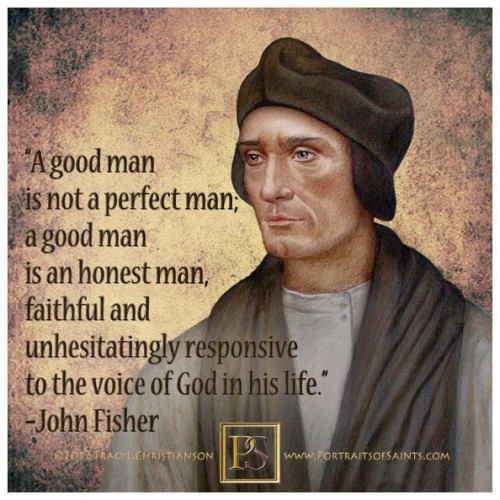 |
| How many bishops are willing to walk in the footsteps of martyr Bishop John Fisher? |
make all the decisions and impose them on his underlings beginning with the heads of the various departments. They can express their opinions to him, but he is the ultimate authority and if they disagree they can obey anyway or "off with their heads!"
That is not a proper image for the Catholic Church.
The pope is not a dictator with the ultimate power to throw out bishops on a whim because he doesn't happen to like them. Unfortunately, the bishops themselves have promulgated that image by the unjust treatment some have dished out to their spiritual sons. Cancelled priests are a growing problem. I know some of them and it is disturbing to see how unjust some bishops are. The sad truth for those bishops is that you reap what you sow. They will be measured out the same measure and rotten fruit they've dished out to others. Get ready for it, Your Excellencies!
Friday, June 21, 2024
Do We Defy the Authority of the Church if We Disobey the Pope's Demands?

I'll answer a question with a question, two questions in fact. Was it wrong for Catholics to disobey the pope when he said everyone should get the COVID jab? Were Catholics who refused to obey the pope challenging the authority of Holy Mother Church?
Simple answer to both questions: NO! NO! HELL NO!
Sunday, January 2, 2022
Fathers, You Are "Obliged to Resist" Traditionis Custodes and the Responsa ad Dubia
‘Sitting on the fence is not an option’: It is our duty to resist suppression of the traditional rites according to Dr. Peter Kwasniewski.
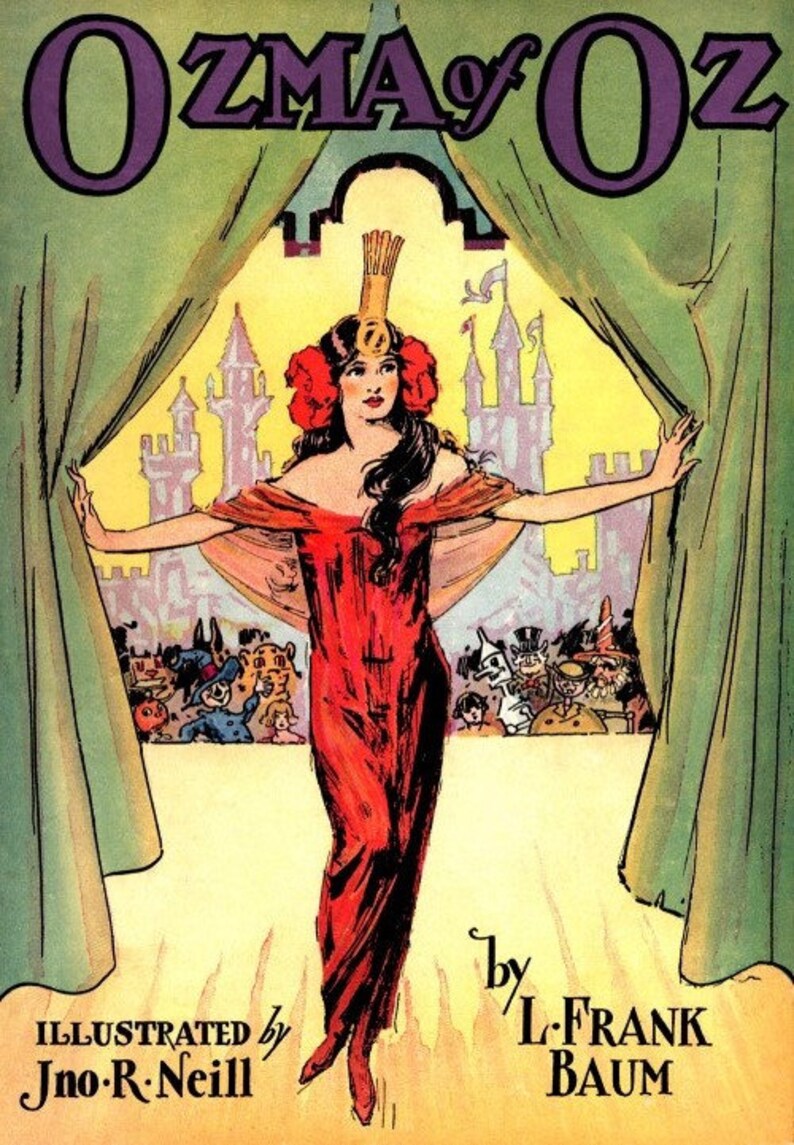
Okay, folks, we're not in Kansas anymore! The shockwaves of the atomic bombs of Traditionis Custodes and the Responsa Ad Dubia have thrust us head over heels into the land of Oz where the white-robed warlock of the west rules with a wooden stang given to him by Ozian youth in the name of Ozma during a synod for young people....
Well, enough of that nonsense!
Thursday, September 30, 2021
When Obedience is Used as a Tool of the Devil....
 |
| Who is like unto God? |
Obedience is a great virtue. In fact, it is often called a foundational virtue, one that stands as a pillar to others. Whom are we called to obey? God first, of course. Then those who have lawful authority over us. Children owe obedience to their parents. Catholics owe obedience to the doctrine and precepts of the Church. We owe obedience to those in lawful authority in government. We owe obedience to the Truth, who is a person, Jesus Christ.
Monday, May 6, 2019
Disobedience Is Not An Option
The first reading on Sunday May 5 was from Acts 5:27-32. The apostles made it clear to the Sanhedrin that they were not free to do as they wanted in order to please the Jewish court. They were obligated to obey God by praising, Jesus. They said, “We are witnesses of these things, as is the Holy Spirit whom God has given to those who obey him.”
Monday, January 7, 2019
My Thoughts on the Gag Order Put on Fr. Mark Goring by Chriss Rainey
I am absolutely crushed that Fr. Mark Goring has been
silenced. He was told to cease and
desist by “his superiors.” He didn’t say
how far up that command went. Was it
only from the head of his order? Or was
it through that head coming further up the food chain from Cardinal Daniel DiNardo,
bishop of Houston-Galveston, and president of the USCCB? Or who knows?
Was it from the Vatican after some whining from Cardinal Donald Wuerl? It doesn’t matter. Someone with power to ruin his whole life has
put the thumb screws on one of the most refreshing voices I’ve heard in a very long
time.
Saturday, July 11, 2009
Blind Obedience is not a Virtue
 The latest issue of Christifidelis, from the St. Joseph Foundation, is out and it's a corker! The lead article by Philip Gray, J.C.L. is a great discussion on what obedience is and when a person is required to obey a lawful authority. Obedience is a subset of the cardinal virtue of justice which requires us to give to God and neighbor what is due to them. We owe absolute obedience to God, so all other laws are subservient to and subject to God's laws. When there's a conflict between God's law and a lower law, guess what we have to do? "We must obey the higher [law] lest we sin."
 There are limits on human authority. "Directives that violate divine law must be ignored, and in many circumstances we have an obligation to resist them actively." Gray gives China's forced abortion laws as an example.
We must obey legitimate authority. However, if those in authority act outside the boundaries of their authority, they need not be obeyed. For example, parents have authority over their children, but don't have the right to demand that an adult child follow a particular vocation. So when St. Clare fled from home to become a nun she did not act in disobedience.
My own mom left Cleveland against her mother's will (but with her father's support) to fly to California and marry my dad before he was deployed to Pearl Harbor in 1940. Even if her father had joined in opposing the marriage, she would not have been disobedient to ignore their wishes because parents have no authority to choose the marriage partners of their children. (I guess that means I can't arrange any marriages for my grandchildren. Darn!)
Gray points out that "to develop the virtue of obedience, we must develop an adequate knowledge of divine laws and those human laws that regulate our lives. We have to know the limits of authority. If we do not know the limits of authority, we can be easily manipulated or used by lawful authority." In other words, just because someone has authority over me doesn't mean I'm obliged to follow every directive. He cannot demand unlawful obedience. Those who "when faced with a direction...neither seek to know options and consequences nor deliberate their choices" show an attitude that "is not true obedience nor is it virtuous." In other words, blind obedience is the cop-out of a lazy individual who doesn't want to take the trouble to study and understand the nature of obedience, its requirements and its limits.
Gray goes on to say that "we have an obligation to know the divine laws and what our obligations to God are. Only with knowledge of divine laws and the legitimate boundaries of lawful authority can we obey." The person who claims authority must also be able to prove it because "we are not bound to obey someone who cannot provide proof of his authority and who does not stay within the bounds of his power."
Gray uses the example of options for Communion as an example of the abuse of legitimate authority, perhaps because it's been so common over the years. In the Latin rite, the communicant has the option of kneeling or standing for Communion and the priest may not infringe on that right. "If a priest demands that a kneeling communicant stand, the communicant does not have to obey....If the communicant follows the priest's demand, this is not obedience. Obedience takes place only when we give authority its rightful due. In this case, the priest went beyond his lawful authority and the communicant allowed him that privilege....If the communicant did not follow the directive, he would not be acting in disobedience...because the priest does not have the authority to demand the standing posture during the reception of Holy Communion. The priest would be acting outside his legitimate bounds, and the communicant would have no obligation to 'obey.'" The same type of abuse of authority comes into play when a priest or religious education teacher instructs communicants they must receive in the hand and may not receive on the tongue. I know of a parish in Maryland where this was routinely demanded by the pastor for First Communicants. This is a serious violation of his authority as well as a violation of Canon Law.
More and more today it's essential for Catholics to understand the nature of obedience and legitimate authority and to know their rights. Last May when Notre Dame police ordered pro-lifers off what is an open campus, similar to a small town, simply because they were carrying signs showing aborted children or pushing baby strollers with dolls covered in stage blood, were they disobedient for refusing to comply? I don't think so. Under the first amendment of our Constitution people cannot be discriminated against due to the content of their speech. Since Notre Dame allowed others to carry pro-Obama and pro-Fr. Jenkins signs on campus they could not legitimately discriminate against others just because they found the content of their signs objectionable. It will be interesting to see what happens in court as the cases are heard, but I do not think those who refused to comply with the order to leave campus were "disobedient" according to Gray's article. Sidewalk counselors, videographers attending gay pride parades, protesters, etc. are all subject to abuse by over-vigorous authorities violating their boundaries.
I'll close with one personal example. About ten years ago I set up a pro-life table at my polling place. I was the proper distance from the entrance so I wasn't violating any election rules. However, someone complained about the graphic pictures and the fetal models and an election official came out, ordered me to put everything away, and called the police. The responding officer told me if I didn't remove the "offensive" materials, I'd be arrested. I complied, but went home and called the American Center for Law and Justice who telephoned the polling place. The election officer backed down (actually apologized) and I put my materials out again. Had I refused to comply I would not have been disobedient. Rather I would have been challenging the boundaries of their authority which they clearly abused. More and more today, Catholics in the public square need to know and understand God's law, the nature of obedience and legitimate authority, and the limits and boundaries of that authority. Only then can they make intelligent choices and act in ways that are truly just and prudent and will help us, as Gray says, "freely choose to exercise the virtue of obedience and gain merit directed to our salvation."
Subscribe to:
Posts (Atom)